
John Franklin Pincock and Susannah Blackford Pincock

John Edmund Pincock and Alice Parker Richards Pincock


(Green Canyon Hot Springs)

Up until the first white men came into the area, little is known about the hot spring and the human activity concerning it. But it isn’t hard to imagine the Indians, who seasonally made there home in this area, enjoying a cleansing and relaxing morning or evening soak in the sparkling clear hot spring water.
The springs issue forth from the base of the Big Hold mountains at a temperature of 115 degrees Fahrenheit, a little east of the present building. The water contains magnesium, lime, and trace of iron, but no sulfur. Sulfur is very common in other hot springs and gives them a distinct smell.
The hot springs were first visited by white man in 1811. Wilson Price Hunt visited them while spending time at Fort Henry. The rest of his crew built canoes for their ill-fated trip down the Snake River. Mr. Hunt was to establish a trading post at the mouth of the Columbia River. Planning to meet a supply ship sent around South America and bound for the Pacific Coast, Hut, upon arrival, found his ship was blown up and sunk due to an Indian raid. To send the news back to the mother company in St. Louis, he sent seven men to go overland. The group, led by Robert Stuart, made its way eastward, following the Snake River, and ran into Indian trouble near the head of the present day Palisades Reservoir. Horses stolen and left on foot, they built rafts and floated down the river to what we no know is Ririe, Idaho. At this point, they decided to go cross-country to the Teton Mountains. In late September of 1812, they stopped and camped here, and soaked in the hot springs before crossing the Big Hole Mountains into Teton Valley on October, 1812. One of the groups rebelled, refusing to cross “another mountain,” and walked around the smaller hills to the North, a longer but easier route. The individual did make it, and they joined up again in Teton Valley. The group eventually made its way to St. Louis after suffering from serious hunger.
Robert Stuart’s Party made a considerable contribution to the westward movement by traveling the entire length of the Oregon Trail except for their detour through Eastern Idaho.
 Green Canyon began that same year as a side venture to the new sugar factory. In order to build the factory, the contractor needed lime for the mortar used in laying the brick. Lime was also needed for the sugar making process after the factory was up and running. Two brothers John E. and James H. Pincock took a contract to supply the lime for the new plant, and the closest lime deposit for them was here at the hot spring. The big white rock just east of the pool is made up of lime. The Pincock brothers filed on a limestone claim and began to mine, burn, and powder the rock for the contract made to E.H. Dyer.
 The urge to return to the Snake River Valley to help colonize it became stronger and stronger for James. By spring of 1883 James H., his brother, John E., and a brother-in-law, John A. Garner, and Harold Heninger started north. They reached the spot where Rexburg now stands on May 7, 1883, then went on to make claims one mile east of where the old Sugar Factory stood. By the spring of 1884 the two Pincock brother and Garner had constructed log homes sent for their wives and families, and established themselves in the valley.
 y Sunday night was the cleaning night and the pool would be emptied and scrubbed down. Frank put on his boots and with a big broom followed the water down, scrubbing as he went. It would take a long time because the outlet valve was so small. The children’s job was to scrub the dressing rooms. Monday the pool was closed for refilling.


 Further along the Old Bobbin Mill is now a very palatial residence. An interesting date stone could be seen in the retaining wall on the right with the inscription ‘Richard Johns 1662’. The wall is directly below Armetriding Farm, reputedly the oldest buildings in Euxton. Further up the lane Mike pointed out a very nice tennon top gate post almost totally hidden on the hedge. We reached Dawbers Lane and returned to the A49, looking at the old Catholic School on the way. After a brief look at Euxton Hall we completed the walk.


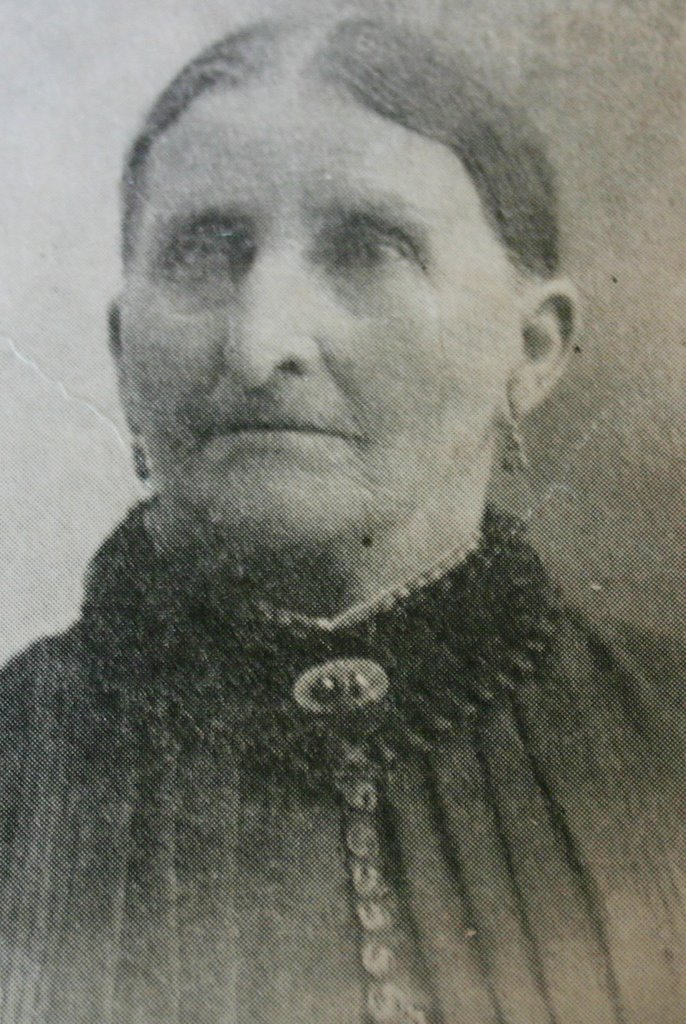

Biographies of:
John Pincock, who was the son of John Pincock and Mary Marsden, natives of
and
Written by Charlotte Pincock Garner, their daughter, this 28th day of June 1929, at
Note: additions or corrections have been added between [ ] brackets. The text is otherwise as first written.
Biography of John Pincock
Son of John Pincock and Mary Marsden, natives of
He settled at
The home broken up, he found employment with Father Taylor (President [John]
“But,” he said, “we worked hard for it; at one time we worked three days and nights without stopping, only to eat. When we got through with the job, we could sleep without rocking”
He stayed with his brother-in-law the winter of 1846, and went to
The following summer he went to work on a boat running from
It was during this time he became acquainted with the
They remained in
They remained in
They managed to get logs enough to build one room and moved in before it was finished.
It had neither floor, door, nor window to keep out the cold. A short time after, they were able to get a window and enough lumber to make a door and some home furniture which consisted of a table, a bench, and a one-legged bedstead. Although this was crude, they were happy as could be, not feeling dissatisfied nor wishing that they had not come west. They never had a thought of going back.
It was here that their second child was born, a son. They lived in this house for one and a half years, then sold out and came to
There were some crops raised the next summer, and he continued to work on the threshing machine during the fall of 1857, earning enough for themselves and a little to spare to others who had none. It was like the widow’s meal, never seeming to run out, so no one starved. He took part in many public enterprises, helping to build the first road through
In the year 1858 when
With a number of others he made a trip to
He helped build the grade for the Utah Northern in 1871 and in the fall of that year went to work at the freight depot, and was later promoted to depot policeman. He served in that capacity for about twenty years, but resigned on account of his feet getting bad from walking on the board platforms so much. He was honored and respected by all the railroad officials and employees. On account of his uprightness, he was given the title Honest John.
In the spring of 1974 [1874], he purchased a farm in the southwest part of the city, now known as 33rd street where he moved his family; living in a barn all summer while he was building them a home. Here he resided the balance of his life.
For two years he was county commissioner of
He was a High Priest and member of the Weber Stake High Council for seventeen years; filling every position he had held with honor and fidelity. He went through the Endowment House at
After leaving his work at the depot he spent his time looking after and caring for his lawn and other things around his home. He was fond of a good joke, but took no part in smutty or vulgar stories, he was a lover of music, and he and his wife often sang together at parties in early days. He also enjoyed dancing and did his share of it when a young man. He was unselfish, kindhearted, sympathetic, and even-tempered and just in his decisions, never getting excited or hasty in any matters with which he had to deal. He was very fond of children, enjoyed talking and joking with them, and often took them on his knee and asked them questions and taught them the answers. He was opposed to card playing and never allowed cards to be kept in the home, nor had a game played. He was a lover of good animals, especially horses. He fed them well and prided himself in keeping them is fine condition by giving them the proper care. He would rather walk than ride behind a poor team. He was of a sunny disposition, a sturdy, healthy type, blessed with a strong and vigorous body and never had any sickness, not even a toothache or ever having sat in a dentist’s chair. He lived a consistent Latter-day Saint life and was honored and respected for his unquestioned loyalty to his church and country.
He passed away
At his death his grandson, Dr. H.B. Forbes, gave this wonderful eulogy of him:
“Honest John Pincock is dead after an honorable and useful career of seventy-five years. His was a life of earnest effort and generous deeds, unmarred by a single selfish thought or act. He was characterized by an unconscious simplicity of mind and that is akin to genius, and from which sprang a degree of love of truth and honor and moral courage that is rarely seen. Coupled with these was a contentment of mind, open countenance, a sunny disposition, which diffused sunshine and happiness on all about him. His life was, and will remain, an inspiration to those he leaves behind and, like the golden grain of autumn that has filled his destiny, he died matured and ripe and has gone to a well-earned and unfeared repose without a single enemy or having knowingly injured anyone. He died, as he had lived, in peace, surrounded by loving relatives and friends, poor in worldly attainments, but rich in the esteem of all and loved most by those who knew him best.
Words cannot describe the beauty of his character.
One of God’s noblemen has gone from among us forever, but he has left us a heritage of loving memory more lasting than worldly monuments. Peace to his honest soul.”
Biography of Isabella Douglas
Daughter of George Douglas and Ellen Briggs, natives of
The wonderfully successful life of John Pincock would never have been what it was without the help and fine understanding of his loving wife, Isabella Douglas.
The story of her life is best told as related it herself at a meeting of the Daughters of the Utah Pioneers a few years ago, and is as follows:
“I was born in
My parents were converted to the gospel of the Latter-day Saints by Heber C. Kimball in March 1838. The family came to America in 1842 one year after the Pincocks, coming by way of New Orleans and up the Mississippi River and landing in Nauvoo, Illinois, April 6, 1842, where they made their home for four years. They became very familiar with the historic events that took place in the Church during these years. My father went to work as a day laborer, worked some on the Nauvoo temple and later found employment on the Prophet Joseph Smith’s farm. He was a mason by trade in his native land and was not accustomed to the extreme heat of this country, and succumbed to sunstrokes while laboring in the harvest field
My mother was then left with a family of seven children in a strange land without support, excepting the little means that she and the older children could earn. She was compelled to go out to day’s work, leaving me at home as a house-keeper with three younger children, my age at the time being nine years. We continued to make a living in this way until the Saints were driven from the city of
I saw Governor Ford and staff when they were there and when he pledged his word of safety to the Prophet, and I distinctly remember the military display and the feeling of fear that came over the entire community. I heard the bugle blowing and was very much excited as it was the first time I had heard a bugle call. This bugle was blown by one of the Governor’s party who were on their way to the city of
I also saw and stood by the side of a sled drawn by a team of horses upon which the wounded Apostle John Taylor was being taken home. (A sled was used because it was more comfortable than a wagon. Conditions in Nauvoo continued to grow worse until the Saints began to move westward. About this time my mother [Ellen Briggs Douglas] was married to John Parker who had three children and his aged father. This increased our family to thirteen. My mother, step-father and the three older children were compelled to go out to work leaving me with the remaining eight to care for. (I was then fourteen years old.) All the responsibility of the home and family was in my care. We had no stove. We baked our bread in a bake kettle by a fireplace. We had no yeast cakes with which to make bread, but would set salt-rising bread and bake every day. Washing, ironing, mending and caring for the family depended entirely upon myself.
After the expulsion of the people from Nauvoo, we returned to
As stated in the previous history it was at
“I was kept very busy caring for my children. They had nothing to wear except what I could make, not even hats and caps. I braided straw hats for summer and made caps for winter. I did all my sewing by hand, knitting all the stockings, spinning the yarn and coloring it, made candles and soap and many other things which cannot be mentioned.
Our log cabin was clean, and although we were poor and I had much to do I felt happy and contented in caring for my little ones, believing all the time I was doing a mother’s duty.
I [Isabella] am now in my 82nd year, and while I am not enjoying the best of health, I am able to be about the house and enjoy the comforts of my home, for which I am very thankful. I feel satisfied with my life’s work, and after having passed through all the trials and hardships incident to pioneer life, and for the benefit of those who read these memoirs that they may not forget what the pioneers had to pass through that made conditions such as they now enjoy.” [end of Isabella’s memoirs]
And now I wish to write a few of the fine qualities and gifts of my dear mother.
She was an ideal wife and help-mate devoted and loyal to her husband and his interests and their success in life was due in no small measure to her ability, devotion, and industry. She worked shoulder to shoulder with him [her husband, John] and her practical wisdom and vision were a great asset in the partnership.
She was ambitious, frugal, and thrifty, ingenious, and resourceful. She had very little schooling but seemed to know just how to adjust herself to any condition that came up. She was a good cook and housekeeper, always having her work planned ahead of time. She was an expert darner, mender, and was a beautiful sewer. She was gifted in caring for the sick, her touch bringing relief and comfort. (There were no doctors in those days.) Many times in case of emergency, she relieved many of her neighbors and friends in time of confinement.
Being alone when one of her children was born, she did first requirements for herself. This happened on the 20th of January. It was very cold weather, but having a fire in the fireplace, she arranged her bed close by so that she could keep warm until help came. No bad effects came to her. On another occasion, sister Belle had two of her fingers severed by an axe. Mother put them in place, wrapped them up, and the result was that they grew on without much disfigurement.
She also set the broken limbs of several animals with good results. She taught her children honesty, thrift, industry, and never allowed them to waste anything.
I am sure it took courage, faith, and willpower to face the obstacles, struggles, and privations that our pioneer fathers and mothers had, and I am proud and thankful to be born of such ancestry.
She [Isabella] passed away
Life of John E. Pincock
Early Pioneer of

My Father, John Edmond Pincock was born December 16, 1853, at
On February 27th, 1879, he was married to Alice Parker Richards, Daughter of Samuel W. and Mary Ann Parker Richards of Salt Lake. From which union there were ten children. Seven sons and three daughters. Their names were according to age John Franklin, Mary Alice, Henry Dewey, Richard Parker, Samuel Whitney, William Aaron, Howard, Edith Vilate, Carrie Alene, and Parley Parker. Five sons and two daughters are now living.
In the spring of 1883, he resigned his position with the railroad company and started for his new home in
He had two yoke of Oxen, a wagon, a saddle pony, a mare. and two colts and eight head of stock cattle. He traveled alone, and in crossing the Devide, North of Collinston,
Then he preceeded without further trouble, arriving 18 days later on the site of his home on the 10th day of May, 1884, where he continued to reside until the time of his death. He has lived in a Territory, a State, five different Counties, Six precincts , without changing his place of residence. The counties were Bannock, Onedia, Bingham, Fremont and Madison.
He commenced at once to prepare the land and put in a small crop of wheat, oats, and potatoes. When the harvesting was completed, he had 171 bushel of wheat and 10 bushel of oats. On account of poor fence he slept out in the field for two months to keep horses and cattle from destroying his crop.
On July 7, 1888, he was set apart as second counselor to Bishop Davis of Wilford Ward, and served in that capacity until 1892. In 1893 he was ordained Bishop of Teton Ward, this part of Wilford being annexed to Teton. Under his direction, the only stone meeting house in the Stake at that time, was built. He served as Bishop for ten years and was then honorably released.
During this time the railroad came in the Valley and Sugar Ward was organised. This part of Teton Ward was annexed to Sugar. Father was one of the building committee to build the Sugar Ward meeting house. He also served as a school trustee.
On July 1st, 1904, he was set apart as High Priest couslor in the Fremont Stake. On June 16, 1907, he was ordained President of the High Priest quorum.
He was a member of the building committee for the
building and the Stake Tavernacle. Father was very active in civic life a nd affairs as well as in the church. In the year 1896, he was elected Sheriff of Fremont County, served two years. Was then elected assessor and collector, then the county commissioner, serving in each capacity two years. Later he was appointed State Grain Comissioner by Governor James H. Hawley.
In 1916, he was elected State Senator from
At the death of James Siddowny, father was elected President of the Fremont Woolgrowers association and still hold that office at the time of death. In 1918, he was elected President of the Water Users Protective Association of the North Fork of Snake River and its tributaries. The same year, he was elected President of the Fremont, Madison Reservoir Company, known through the press and to the Public, as the Fall River Meadows Reservoir, which is located in the extreme Southwest of the
Through-out all this time, he was a successful farmer and stock grower, a nd I quote from his own words, “So as I turn back the pages of memory and look at the years of struggle and toil that I have experienced and watch the growth from a desert to a great producing empire, I feel that I have certainly been favored by having participated in this great period of development.”
Father was known everywhere for his sterling qualition of honesty and integrity. His Wise council was sought by many and he was often called to settle disputes between people because of his fair judgement.
His posterity numbers seven sons and three daughters, thirty seven grandchildren, fifty-one great, grandchildren.
In May, 1924, he was stricken with Brights disease and passed away at his Fathers old home in
Transcribed by: Larissa Barsalou
Fall 2002


